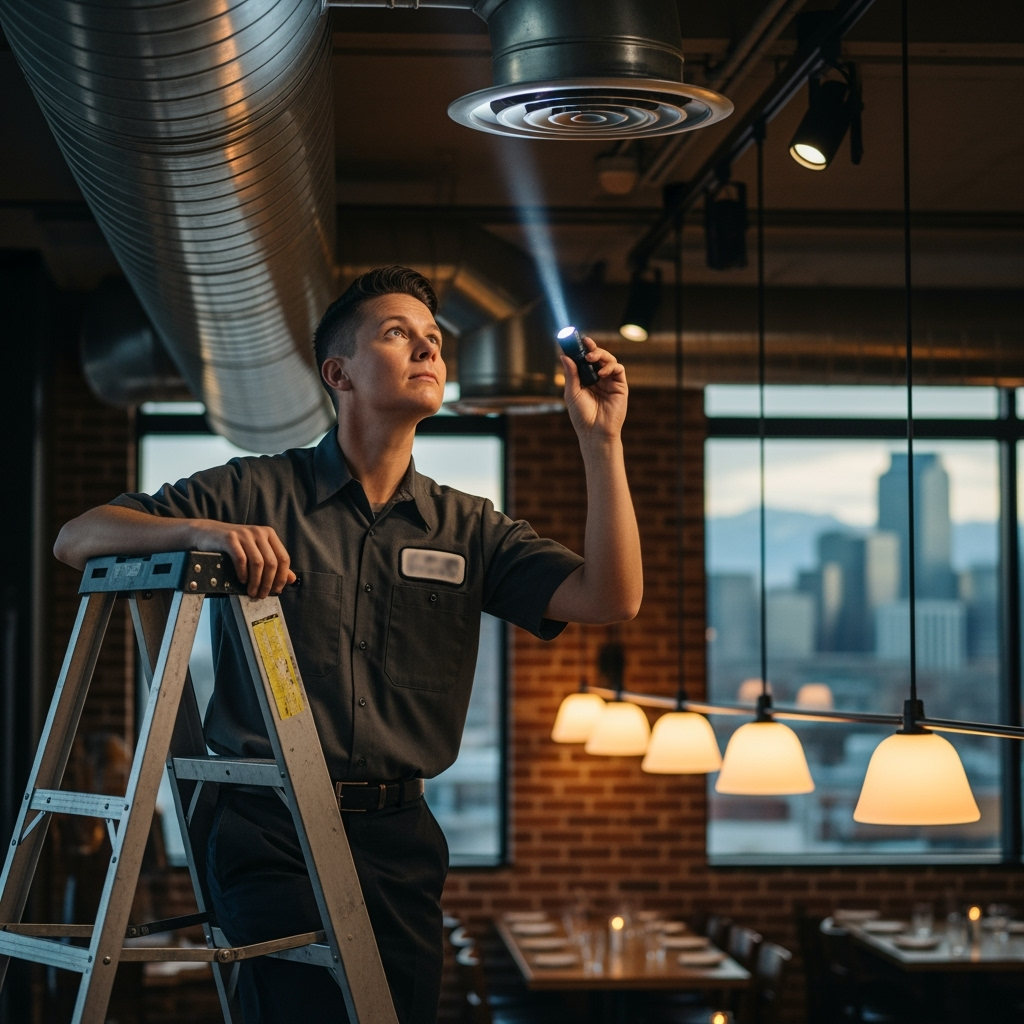
When I work with restaurant owners across the city, the first question I get is about the lighting. That’s why I always point them to restaurant lighting in Denver, CO, as a starting point for thinking about how light, HVAC, and refrigeration interact in busy kitchens and dining rooms. Good lighting makes food look better and guests feel welcome, while efficient systems reduce energy bills and equipment strain—a tradeoff the U.S. Energy Information Administration highlights when talking about commercial building energy use https://www.eia.gov/.
Why lighting matters more than you think for restaurants
Lighting is about mood, but it’s also about operations. The right fixtures and controls help servers read menus without squinting and kitchen staff work safely. They influence how appetizing a plate looks under the light and how long guests stay. In Denver’s high-elevation climate, with bright daytime sun and long evenings during summer festivals in neighborhoods like LoDo and RiNo, lighting strategy plays a role in both curb appeal and utility costs.
Top lighting trends I’m seeing in Denver restaurants
Restaurants here are moving faster than ever toward smarter, healthier, and more efficient lighting. I focus on these trends when consulting with owners:
- Tunable LED fixtures that change color temperature through the day to match natural light and create a calm dining experience at night.
- Human-centric lighting that supports staff alertness and guest comfort by mimicking daylight cycles.
- Advanced controls and zoning that link lighting with HVAC and refrigeration loads to lower peak demand charges during busy service hours.
- Full LED retrofits that reduce maintenance and heat load in kitchens, lowering HVAC strain.
How lighting affects HVAC and refrigeration
Every watt of lighting translates into heat. In a compact kitchen, incandescent or poorly ventilated fixtures can force HVAC systems to work harder, raising cooling costs and increasing the stress on walk-in coolers and freezers. I recommend seeing lighting and HVAC as a system: when fixtures are more efficient or heat-producing lamps are removed, the cooling load drops and refrigeration systems run less often. That means fewer breakdowns and better temperature stability for your food.
Design principles for restaurant lighting in Denver
When I design a lighting plan for a restaurant in Denver or help teams update their systems, I follow these clear principles to balance ambience, safety, and cost.
Layer light for flexibility and comfort
Start with three layers: ambient (general), task (work areas), and accent (food and architecture). Ambient light sets the overall mood. Task lighting in prep stations and dish areas must be bright and shadow-free. Accent lighting draws attention to the bar, signature dishes, or artwork. Layering makes it easy to change the mood for lunch versus dinner service without rewiring.
Pick the right color temperature and CRI
Color temperature affects how food looks. Warmer tones (2700K–3000K) feel cozy and make roasted and caramelized colors pop, while slightly cooler tones in prep areas preserve contrast and clarity. Color Rendering Index (CRI) matters: choose fixtures with a CRI of 90 or above where food presentation is critical so dishes appear natural and vibrant under light.
Use dimming and zoning with purpose
Smart controls let you tailor zones for different times and events. Dim the dining room for date nights and raise it for brunch. Use motion sensors in restrooms and back-of-house to save power. Zoning also reduces simultaneous HVAC and refrigeration loads, especially when combined with demand response programs during peak utility hours.
Practical lighting choices for typical restaurant areas
Different spaces have different needs. Here’s how I typically recommend approaching lighting in each functional area of a restaurant:
Dining room
Focus on warm ambient light with layered accent fixtures above tables or booths. Pendant lights over tables create intimacy without glare. Consider flexible tracks or adjustable pendants so you can change heights and angles to match seating layouts and seasonal decor.
Bar and lounge
Bars benefit from slightly cooler accent lighting to highlight bottles and glassware, combined with warmer seating areas to keep guests relaxed. Backbar illumination should be consistent to avoid temperature differences that can make some bottles look dull under light.
Kitchen and prep
Prioritize bright, shadow-free task lighting and high-CRI fixtures so cooks can inspect colors and doneness. Replace old, heat-producing bulbs with LEDs designed for kitchens to cut heat loads and reduce the burden on ventilation and cooling systems.
Walk-in coolers and refrigeration
Choose low-heat, rugged LEDs designed for coolers. Lighting inside refrigeration units should be bright but not generate heat that forces compressors to cycle more frequently. Proper sealing and appropriate fixtures will lengthen equipment life and improve food safety.
Energy and cost considerations that matter in Denver
Energy costs and peak demand charges are real line items on any monthly bill. Upfront investment in LEDs, smart controls, and coordinated HVAC-refrigeration strategies usually pays back faster in commercial kitchens because of continuous operation. Additionally, Denver utilities and local incentives often provide rebates for energy-efficient retrofits, so I always advise checking current programs in this area before committing to large upgrades.
Step-by-step checklist to upgrade lighting without disrupting service
Upgrades in restaurants must be planned around service hours. I follow this checklist to keep disruptions minimal and results measurable.
- Audit existing lighting and map it to kitchen, dining, and bar zones to identify hotspots and inefficiencies.
- Prioritize high-impact swaps like replacing heat-producing lights in the kitchen and retrofitting walk-in cooler lighting.
- Phase installation during slow periods or closed days and test new scenes with staff before public service.
- Integrate lighting controls with HVAC schedules to avoid simultaneous heavy loads during peak hours.
Permits, codes, and accessibility in the city
Local codes in Denver and county health regulations influence lighting choices. For example, exit signage, emergency lighting, and back-of-house illumination must meet code. I recommend consulting with a licensed contractor who understands code requirements for commercial food service locations, especially when adding exterior lighting or changing electrical panels.
Common pain points and how to avoid them
From my experience, these are the big issues restaurants face with lighting and how I help solve them:
Problem: Lighting that makes food look dull
Solution: Use high-CRI fixtures in plating and display areas. Test bulbs on signature dishes during a mock service to confirm appearance before switching the whole venue.
Problem: Increased cooling loads after lighting installation
Solution: Choose low-heat LEDs and coordinate with HVAC technicians to rebalance ventilation. Sometimes swapping a high-wattage fixture for LEDs reduces cooling runtime enough to offset upgrade costs quickly.
Problem: Frequent refrigeration fluctuations
Solution: Audit internal refrigeration lighting and door seals. Replace warm-light sources inside coolers, and ensure fixtures are rated for low-temperature environments to prevent heat transfer that causes compressors to cycle more often.
How to choose a local contractor who understands restaurants
Working with a vendor who knows restaurant workflows and local neighborhoods—from Cherry Creek to Capitol Hill—saves time and money. Look for contractors who provide:
- Experience with commercial kitchens and walk-in refrigeration lighting.
- Knowledge of lighting control systems and integration with HVAC schedules.
- Clear project phasing to avoid business disruption and flexible scheduling for nights or off-hours.
Case examples and quick wins I often recommend
Small changes can yield quick wins for both appearance and utility bills. Here are a few practical upgrades that often deliver immediate benefits:
- Swap warm incandescent bulbs in dining areas for warm-toned LEDs to cut energy and reduce replacement frequency.
- Install occupancy sensors in storage rooms and restrooms to automatically cut power when spaces aren’t in use.
- Layer lighting at the host stand to improve visibility while keeping the surrounding dining room dimmer for ambience.
- Upgrade cooler lighting to purpose-built LED strips that withstand low temperatures and reduce heat load.
Maintenance and long-term planning
Lighting planning doesn’t end at installation. Keep a schedule for cleaning fixtures, checking controls, and replacing components before they fail during service. Plan for lifecycle replacements and factor in the decreasing cost of LEDs and smart controls over the next five years. In my experience, a preventive maintenance contract that covers both lighting and HVAC or refrigeration yields better uptime and fewer emergency calls.
Two trends to watch next year
Looking forward, I’m watching two trends that will shape how restaurants approach lighting in Denver:
Electrification and integrated systems
More restaurants are electrifying and integrating systems so lighting, HVAC, and refrigeration respond together to demand signals. This helps reduce peak charges and supports local grid resilience.
Health-focused lighting and staff well-being
Restaurants are investing in human-centric lighting to help staff maintain energy levels during long shifts and to create more natural-feeling dining rooms. This trend supports both productivity and guest satisfaction, especially in neighborhoods with vibrant nightlife.
Final checklist before you start a lighting project
Before you sign a contract, run through these final checks. They protect your investment and keep the restaurant open during upgrades.
- Confirm code compliance and permit needs with the city or county.
- Request references from similar projects, ideally in nearby neighborhoods.
- Get a phased installation schedule that works around service hours.
- Ensure the scope includes a control plan that coordinates lighting with HVAC and refrigeration systems.
If you want help turning these ideas into a practical plan for a space in Denver, whether it’s a small neighborhood bistro or a high-volume kitchen near the ballpark, I can help connect the lighting strategy to your HVAC and refrigeration needs. For a full commercial approach that covers installation, maintenance, and energy-saving upgrades, contact Nextech.